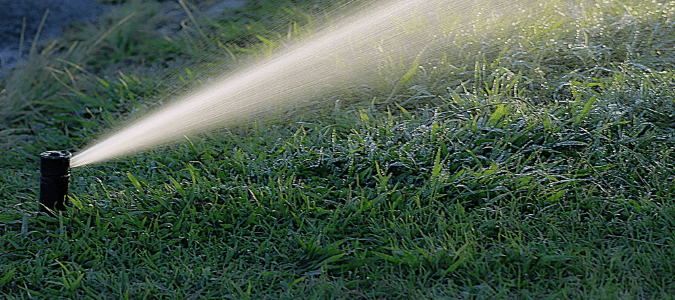
How often should you water your lawn with a sprinkler system in Houston? For most homeowners, it’s a guessing game — and the wrong answer costs you a brown lawn, fungal disease, or a triple-digit water bill. Run the sprinklers too long, and you waste water, drown your roots, and inflate your bill. Run them too short, and your grass dries out under the Texas sun. The right answer depends on your specific yard, soil, grass type, and sprinkler system. This guide walks you through exactly how to dial it in, with practical advice from ABC’s Houston lawn care experts.
Key Takeaways
- Most Houston lawns need 1 to 1.5 inches of water per week, including rainfall, and grow healthier when that water comes in two deep soakings rather than daily light sprinkles.
- Overwatering is the biggest mistake Houston homeowners make, not underwatering. Too much water leads to shallow roots, fungal diseases, soil compaction, and inflated water bills.
- Every sprinkler system delivers water at a different rate. The only way to know how long to run yours is to measure each zone individually with a simple can test — usually 30 to 60 minutes per zone, twice a week.
- Water before 9 a.m. Watering at night invites fungus; watering in the afternoon wastes up to 30% of your water to evaporation.
- Houston’s clay soil holds water longer than sandy soil, so most yards need shorter, more frequent watering cycles to prevent runoff.
So you’ve got a sprinkler system. You set the timer when it was installed, hit go, and now you’re wondering: Am I actually watering my lawn correctly, or am I just guessing?
You’re not alone. Most Houston homeowners we talk to are doing one of two things — watering too often, or running their sprinklers too long. Both waste water. Both hurt the lawn. And both come from the same root cause: nobody ever told you how to figure out the right schedule for your specific yard.
The good news? There’s a simple way to do it. And once you understand the method, you’ll never have to guess again.
How Often Should You Water Your Lawn?
For most established Houston lawns, the answer is twice a week during spring, summer, and early fall — and only as needed during the cooler months. That’s it. Not every day. Not every other day. Twice a week, with enough water each time to soak the soil 4 to 6 inches deep.
This advice surprises many homeowners. The instinct when it’s hot and dry is to water more. But deep, infrequent watering is what actually builds the strong root system your lawn needs to survive Houston summers. Frequent shallow watering does the opposite — it trains roots to stay near the surface, where they cook in the heat and dry out fast.
The City of Houston Public Works irrigation efficiency guide agrees: improper irrigation can waste up to 50% of the water used in residential landscapes.
Why Overwatering Is the Real Problem
Here’s something most people don’t realize. The biggest issue with residential lawn care in Houston isn’t underwatering — it’s overwatering.
ABC’s Houston lawn care team identifies improper watering as the most common problem they see on customer properties. Most homeowners don’t know the precipitation rate of their irrigation system. They guess at run times, set their controllers, and then wonder why their grass keeps dying despite all the water it’s getting.
Chronic overwatering does real damage:
- Shallow roots. When water remains at the surface, roots have no reason to grow downward. A lawn with shallow roots can’t survive even short dry periods.
- Fungal disease. Brown patch, gray leaf spot, and other turf diseases thrive in wet, oxygen-starved soil. Most lawn fungus problems in Houston start with overwatering.
- Soil compaction. Saturated soil compacts under foot traffic, mower wheels, and its own weight. Compacted soil chokes roots and blocks water from reaching where it’s needed.
- Oxygen depletion. Healthy roots need air pockets in the soil to breathe. Constantly saturated soil drives that oxygen out, and roots literally suffocate.
- High water bills. This one needs no explanation. If your water bill spiked this summer and you can’t figure out why, your sprinkler system is the first place to look.
The fix isn’t more water. It’s the right amount of water, delivered the right way.
How Much Water Does Your Lawn Actually Need?
Most warm-season grasses in Houston — St. Augustine, Bermuda, Zoysia — need between 1 and 1.5 inches of water per week to stay healthy during active growth. That total includes rainfall, so if you got an inch of rain this week, your sprinkler system may not need to run at all.
Newly planted sod or grass seed is a different story. New lawns need shorter, more frequent watering until roots establish — usually daily for the first two weeks, then tapering down. But this article is about established lawns.
Here’s the question everyone gets stuck on: how long does your sprinkler system need to run to deliver that 1 inch of water?
The answer depends entirely on your specific system. And the only way to find out is to measure it.

How to Measure Your Sprinkler’s Precipitation Rate (Step-by-Step)
This is the most important thing you’ll do for your lawn this year. It takes about an hour, and once it’s done, you’ll know exactly how long to run each zone of your sprinkler system every week.
ABC’s lawn care experts recommend a more rigorous version of the standard “can test” — one that accounts for the fact that every zone in your system delivers water differently, and that the only way to dial in your schedule is to test each zone separately.
Here’s how to do it:
Step 1: Identify the area your first sprinkler zone covers. Walk it once so you know the boundaries.
Step 2: Gather 5 to 8 straight-sided containers of the same size. Empty tuna cans, cat food cans, or short straight-walled measuring cups all work. Avoid cans with sloped sides — they’ll give you bad readings.
Step 3: Place the containers randomly throughout the zone. Don’t cluster them. Don’t put them right next to a sprinkler head or at the very edge of the zone. Scatter them across the area the way you’d scatter seeds.
Step 4: Run that zone — and only that zone — for exactly 15 minutes.
Step 5: After the 15 minutes are up, measure the depth of water in each container with a ruler. Write the numbers down.
Step 6: Add the measurements together and divide by the number of containers. That’s the average depth your zone delivered in 15 minutes.
Step 7: Calculate your weekly run time. If the average is ¼ inch in 15 minutes, that zone delivers 1 inch per hour — so 60 total minutes per week (split into two 30-minute sessions) will give you the inch you need. If the average is ⅛ inch in 15 minutes, you need 2 hours per week per zone.
Step 8: Repeat the entire process for every zone in your system. Write down each zone’s weekly run time and keep the list somewhere you’ll be able to find it again.
That’s it. Now you know exactly how long to run your system. No more guessing.
A quick reality check: some zones in your yard will need more water than others. Sunny zones dry faster than shaded zones. Sloped zones run off faster than flat zones. The test gives you the baseline. Common sense and a quick walk-through of your yard will tell you when to adjust.
How Long Should You Water Your Lawn?
This is where the can test pays off. Once you know your zone’s output, you can answer the “how long” question precisely.
A few general ranges to give you context (your actual times will depend on your test):
- Spray head systems typically deliver more water faster — often 1 to 2 inches per hour. Most homeowners with spray heads run each zone 15 to 25 minutes per session.
- Rotor head systems deliver water more slowly — usually about ½ inch per hour. Rotor zones typically need 30 to 45 minutes per session.
- Drip irrigation systems deliver water very slowly directly to the roots. Run times can stretch to an hour or longer per zone.
Split your weekly run time into two sessions, ideally on non-consecutive days. So if a zone needs 60 minutes per week, run it for 30 minutes on Tuesday and 30 minutes on Saturday rather than 60 minutes in a single session.
There’s also a method called cycle and soak that works well for Houston’s clay-heavy soil. Instead of one long 30-minute session, you run the zone in three 10-minute bursts spaced 30 minutes to an hour apart. The first burst saturates the surface. The breaks allow water to be absorbed rather than run off. The second and third bursts push moisture deeper. Texas A&M AgriLife Extension has a detailed cycle soak walkthrough if you want to dig deeper.

Best Time of Day to Water Your Lawn
Water before 9 a.m. — earlier if you can. The ideal window is 4 a.m. to 8 a.m., when temperatures are cool, winds are light, and your grass has the whole day to dry off after watering.
Why does the timing matter so much?
- Midday watering wastes water. Up to 30 percent of water sprayed on a hot afternoon evaporates before it ever reaches the soil. You’re paying for water your lawn never sees.
- Evening and night watering invites disease. When water sits on grass blades overnight, fungal diseases like brown patch, dollar spot, and gray leaf spot have ideal conditions to spread. Houston’s humid nights make this risk worse than in drier climates.
- Wind affects coverage. Even moderate wind throws off sprinkler patterns, leading to dry spots in some areas and oversaturation in others. Early-morning calm gives you the most even coverage.
If you can’t water in the early morning, the second-best option is late afternoon — but only if you can stop watering with enough daylight left for the grass to dry before sundown. Avoid running sprinklers between 10 a.m. and 4 p.m.
Houston-Specific Watering Considerations
Houston throws a few wrinkles at lawn watering that homeowners in other climates don’t deal with. Knowing them changes how you adjust your schedule.
Houston’s clay soil. Most yards in the Greater Houston area sit on heavy clay. Clay holds water much longer than sandy soil, which means you can water less often than you might think — but it also absorbs water more slowly, which is why the cycle-and-soak method works so well here. If you see water pooling or running off the curb during a watering cycle, your soil isn’t absorbing fast enough. Shorten each cycle.
Grass type matters. Bermuda grass versus St. Augustine comes up constantly in Houston yards, and the watering math is different for each. St. Augustine has shallower roots and poorer drought tolerance, so it needs consistent moisture to stay healthy. Bermuda is the most drought-tolerant of Houston’s common grasses and bounces back fast even after stretches of dry weather. Know what’s growing in your yard before you set your schedule.
Summer heat thresholds. When daytime highs hit 95°F or above for several days in a row, your lawn loses moisture much faster than usual. You may need to add a third weekly watering session during heat waves — but resist the urge to water every day. Two deep sessions plus one supplemental shorter session beats five shallow sprinkles.
Water restrictions. Houston and many surrounding municipalities limit lawn watering to certain days of the week during dry seasons. Check your city’s current rules before setting your schedule. The Texas A&M WaterMyYard tool factors local conditions and restrictions into its recommendations and sends you weekly run-time reminders by email or text.
Fall is brown patch season. Houston’s transition from summer to fall — usually September into October — is peak season for brown patch fungus. Excess water during this stretch triggers outbreaks. Cut your watering back to once a week in September unless conditions are unusually dry.
Signs You’re Watering Wrong
You don’t need a soil moisture sensor to know whether your watering schedule is off. Your lawn will tell you.
Signs you’re overwatering:
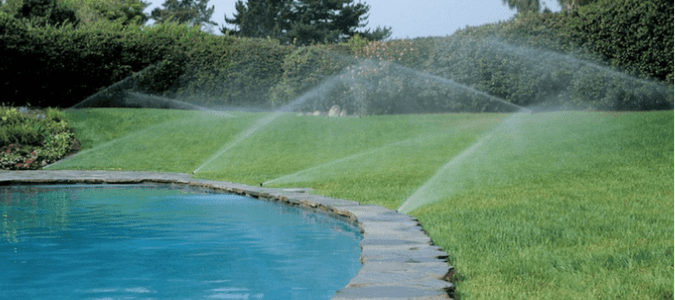
- Standing water or runoff in the gutter after sprinklers run
- Yellowing grass tips despite plenty of water
- Spongy or squishy ground underfoot
- Mushrooms popping up in the yard
- Increased weed growth (overwatered turf creates ideal weed conditions)
- Patches of brown, circular discoloration — a classic brown patch fungus signal
- Higher-than-normal water bills with no other explanation
Signs you’re underwatering:
- Bluish-gray or dull color across the lawn
- Footprints that stay visible after you walk across the grass
- Grass blades folding or curling inward
- Cracking, dry soil visible between grass blades
- A screwdriver won’t push easily 6 inches into the soil
The screwdriver test is the easiest field check in lawn care. Push a long screwdriver into your soil. If it slides in 6 inches with light pressure, your soil is properly hydrated. If it stops short or requires a strong push, your lawn is thirsty.
When to Call a Lawn Care Professional
Most homeowners can run the can test and dial in a good watering schedule on their own. But a few situations call for an expert:
- Your sprinkler system has obvious problems — broken heads, misting nozzles, leaks, and dead zones
- Your water bill keeps climbing, and you can’t find the cause
- Parts of your lawn are dying, no matter what you try
- You don’t know what type of grass you have, or how to identify it
- You want a professional irrigation audit to find waste before peak summer hits
ABC’s licensed sprinkler system repair team can inspect your system, identify inefficiencies, and build a watering schedule that fits your specific yard. Our technicians know Houston’s soil, grass types, climate, and water restrictions — and we’ve been serving Houston homeowners since 1986.
What About Watering Your Garden Beds?
Most Houston homes with an in-ground sprinkler system have at least one zone running through a garden bed or flower border. The math for those zones is different from the math for lawn zones, and the same schedule that keeps your grass healthy can actually hurt your plants.
A few rules to keep your garden beds dialed in:
- Sprinklers aren’t ideal for gardens. They water both the soil and the foliage, which leaves moisture sitting on leaves overnight and invites fungal disease — especially during Houston’s humid stretches. They also waste water to evaporation and wind drift, and they don’t water evenly when plants vary in height.
- Drip irrigation is the better option. Drip systems deliver water directly to the root zone with almost no evaporation loss. If you’re redesigning a garden zone, switch from spray to drip. Most sprinkler companies can convert a zone for a few hundred dollars.
- Group plants by water needs. Native and established plants need far less water than vegetables or newly planted shrubs. If your sprinkler zone covers a mix of high-water and low-water plants, the high-water plants drive the schedule — and the low-water ones get drowned. Re-group plants by their water demands when you can.
- Water when you see the signs. Wilting leaves, dull color, dry soil at the root level — these are the cues your garden needs water. Don’t water by the calendar.
- Most gardens get twice as much water as they need. Same lesson as lawns. Cut back before adding more. Texas A&M AgriLife Extension has a thorough vegetable garden watering guide if you want to go deeper on garden-specific watering.
If your sprinkler system covers both lawn and garden zones, the simplest fix is to set those zones on separate schedules in your controller — or convert garden zones to drip. ABC’s team can audit your whole system and recommend zone-specific changes.
Frequently Asked Questions
How often should I water my lawn in Houston during the summer?
Most established Houston lawns need two deep watering sessions per week during summer, totaling 1 to 1.5 inches of water, including rainfall. During extreme heat above 95°F for several days, you may need to add a third shorter session. Avoid daily watering, which encourages shallow roots and makes the lawn less heat-tolerant.
How long should I run my sprinklers per zone?
It depends on your sprinkler type and your zone’s output. After running the can test, calculate the run time based on the actual output. As a rough starting point: spray-head zones typically need 15 to 25 minutes per session, rotor-head zones need 30 to 45 minutes, and drip systems need an hour or more. Always test your specific system.
What is the best time of day to water grass with a sprinkler system?
Between 4 a.m. and 8 a.m. is ideal. Early-morning watering minimizes evaporation, allows the grass to dry before nightfall, and avoids the risk of fungal disease associated with watering at night. Avoid watering between 10 a.m. and 4 p.m., when up to 30 percent of water can evaporate before reaching the soil.
Can I overwater my grass?
Yes — and it’s actually more common than underwatering in Houston. Overwatering causes shallow roots, fungal disease, soil compaction, and oxygen-starved soil. Signs include standing water, yellowing grass tips, mushrooms, increased weed pressure, and brown patch fungus. If your lawn shows these signs, cut back watering frequency before adding anything else.
Should I water more in shady or sunny areas of my lawn?
Sunny zones dry out faster and need more water than shaded zones. If your sprinkler system uses the same schedule for all zones, you’re likely overwatering shady spots and underwatering sunny ones. Consider adjusting individual zone run times based on sun exposure, or working with a sprinkler professional to set up custom programming.
How do I know if my lawn is getting enough water?
The screwdriver test is the simplest check. Push a long screwdriver into the soil after watering. If it slides 6 inches in with light pressure, your soil is well-hydrated. If it stops short, the lawn needs more water. Footprints that bounce back quickly indicate good hydration; footprints that remain visible are a sign of underwatering.
Does my type of grass affect how often I should water?
Yes. St. Augustine grass needs more water than Bermuda or Zoysia because it has shallower roots and is less drought-tolerant. Bermuda is the most drought-tolerant of the common Houston grasses and can survive on less water. Knowing your grass type is the first step in setting a realistic watering schedule.
Should I follow my sprinkler system’s automatic settings?
Not without checking them. Many factory-set sprinkler schedules don’t account for your specific yard, soil, grass type, or local climate. They also can’t tell when it just rained. A smart controller with rain and soil moisture sensors will adjust automatically; a basic timer-based system needs you to override it manually during rainy weeks.
Take the Guesswork Out of Your Lawn Watering
Watering your lawn doesn’t have to be a mystery. The math is simple. The methodology is repeatable. And once you’ve measured your sprinkler system’s output zone by zone, you’ll know exactly how long to run it every week — for the rest of the time you own the home.
If you’d rather hand the whole thing off to a professional, ABC’s lawn care team can build a watering schedule for your specific yard, inspect your sprinkler system for inefficiencies, and keep your grass green through every Houston summer. We’ve been doing this for Houston families since 1986. Schedule a free consultation to get started.