Key Takeaways
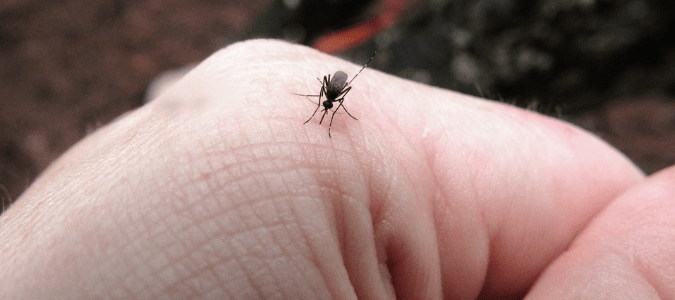
- Those tiny black mosquitoes are likely Aedes species — a group that includes the yellow fever mosquito and the Asian tiger mosquito, both of which are aggressive daytime biters.
- The Asian tiger mosquito was first detected in the United States right here in Harris County, Texas, in 1985, after hitching a ride in imported used tires — making Houston ground zero for this invasive species.
- Aedes mosquitoes are “container breeders.” Even a quarter-inch of standing water in a saucer, toy, or clogged gutter is enough for them to lay eggs.
- Both Aedes aegypti and Aedes albopictus can transmit Zika, dengue, and chikungunya, so activity in and around the house should be taken seriously.
- Stop them indoors with EPA-approved products, tight window screens, and by eliminating every source of standing water within a half-mile of the home — that’s their typical flight range.
If you spend any amount of time at all outside, you are going to encounter mosquitoes. That is just a fact of life. However, you might be wondering why you are suddenly seeing a smaller version flying around inside your house. These tiny bugs are mosquitoes, but not necessarily the types that you might recognize.
Typically, you will find Southern house mosquitoes, which are light brown and feed mostly at night. Smaller varieties are not native to the United States and differ from their native cousins, including a daytime biting preference, as documented by Texas A&M AgriLife. And be warned: These types of mosquitoes, collectively known as Aedes mosquitoes, love to snack on humans.
And these bugs can bring more problems than a little sting on the skin. Aedes mosquitoes also transmit viruses such as Zika, dengue, and chikungunya.
This grouping of mosquitoes lays its eggs in any water source, which is why they are called “container breeders.” Even a quarter-inch of water is enough for these bugs to set up housekeeping and start laying eggs. In fact, one of them — Aedes albopictus, or the Asian tiger mosquito — was introduced to the U.S. when the species hitched a ride on tire casings coming into the country, and was first detected right here in Harris County, Texas, in August 1985. Houston was literally ground zero for this invasive species in North America. If you are noticing an increase in smaller mosquitoes around water sources, contact a licensed pest professional. Professionals will be able to assess the problem areas and suggest treatments.
These mosquitoes need the proteins in animal blood to reproduce. This is why Aedes mosquitoes typically don’t travel far from their breeding sites. Usually, they’ll only fly a half-mile or so. And though their choice of breeding grounds is one commonality, there are some differences in the types of climate they prefer.
Yellow Fever Mosquitoes
For instance, Aedes aegypti — also known as yellow fever mosquitoes — generally live in tropical and subtropical climates. But they can also be found in some more temperate places. These mosquitoes are the primary flying insects that spread the dangerous viruses they carry. In addition to carrying yellow fever, these mosquitoes can also transmit dengue fever and the Zika virus.
Asian Tiger Mosquitoes
Aedes albopictus can be found in cooler climates. Like the Aedes aegypti variety, they feed on the proteins in blood, and they will bite both people and animals — including dogs. Asian tiger mosquitoes are aggressive daytime biters and are considered a significant vector for Zika, dengue, chikungunya, and other bloodborne viruses, which is why any indoor activity should prompt a call to a licensed pest professional.
Australian Backyard Mosquitoes
Aedes notoscriptus (the Australian backyard mosquito) has also been spotted in the United States. If you suspect the tiny black bugs buzzing around your home or exterior might be one of this group, give a licensed pest professional a call. A professional can identify which of these pests you’re dealing with and develop a mosquito treatment plan.

How To Catch Mosquitoes in Your House
If you are seeing mosquitoes around the home, a fly swatter or fly trap is a low-cost way to get rid of a few here and there. However, if you are seeing more than that, take a look at some of the places where they might thrive. They like to hide in dark, damp spots such as under sinks, in the laundry room, or in closets. If you see evidence here that a mosquito brood is blooming, you will want to use an indoor-appropriate product to control them.
Such products come in fogger, pump spray, and aerosol formulations. The product should indicate whether it is approved by the Environmental Protection Agency for indoor use.
Of course, making sure the pests never make it into your home is an even better plan. Understanding what attracts mosquitoes to humans can help you make yourself — and your home — less appealing to them. Check your window screens and be sure you don’t have any holes or tears that let mosquitoes in. And don’t forget to check mesh screens around your chimney, vents, and doors as well.
For mosquitoes, a standard 16×16 or 18×16 fiberglass insect screen mesh is the common recommendation — any tighter, and you start to sacrifice airflow, any looser and smaller biting insects can slip through. If no-see-ums or biting midges are also a concern, a finer mesh, such as 20×20, does a better job of keeping them out. Also, if you have an outdoor porch or veranda, consider adding a screen door there to provide another line of defense.
Mosquitoes love water and can breed in even a small amount. Therefore, it is important to ensure you don’t have any water sources that promote their growth. Check for standing water in your yard, in gutters, and even in children’s outdoor toys. Change out pets’ water dishes and bird baths often. If you have a swimming pool, keep it well-maintained with the proper chemicals or empty it if not in use. A professional pool service team can help keep the water balanced so it doesn’t become a breeding site.
Consider adding plants that naturally repel mosquitoes, such as lavender, basil, marigolds, eucalyptus, citronella, and even catnip. For a decorative pond without fish, some gardeners use camphor tablets to take care of any lingering pests — but camphor should be avoided in ponds containing fish or wildlife, as it can be toxic to aquatic life at higher concentrations.
Even small pools of water on patio furniture or puddles in a carport can attract adult females and provide a home for eggs to develop into little biters. A pest professional can assess any problem areas in and around your home. Then they can recommend and implement a pest treatment plan suited to your specific needs.
How Long Can a Mosquito Live?
A mosquito’s life span varies by species, but they all have the same four-stage life cycle. They all begin life as eggs, which an adult female deposits either individually or as a “raft” of many eggs together. The eggs are placed either directly on the surface of the water, on the edge of a water source, or somewhere that regularly receives rain runoff. See the CDC Aedes mosquito life cycle overview for more on how quickly the process moves.
The time a mosquito spends in the egg stage also varies by species and temperature. Some eggs stay dormant for several years while they wait for the perfect hatching conditions! Others move to the next stage within a few days. Many mosquitoes spend the winter as eggs just waiting for the weather to change.
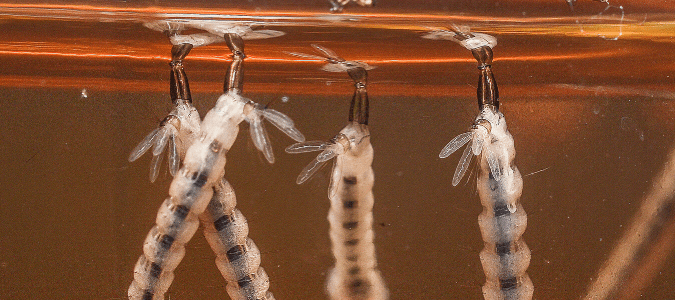
The next stage is the larval stage, which begins once the egg hatches. As you can see in the image above, most mosquito larvae hang from the surface of water because they need to be able to breathe air to survive. They have a tube called a siphon that runs from the posterior of the larva to the water surface, allowing them to obtain the air they need. Larvae also eat microorganisms living near the surface. This allows them to progress through their stages, during which they develop new exoskeletons. The larval stage lasts from four to 14 days.
Next up is the pupal stage. During this time, the mosquito doesn’t eat. It still breathes in air, and it remains active by rolling or tumoring around to escape any predators by diving to deeper water. This stage lasts a shorter time, from 1.5 to four days. Then the mosquito sheds its skin and lets the new adult version out to rest on the water.
Adult mosquitoes emerge at different times. The males come out first, hanging out and waiting for the females to emerge. They die quickly after mating, so that occurs very soon after the females arrive. Most adult female mosquitoes live for around two to three weeks. The mosquitoes that survive winter hide out in places such as attics, garages, or culverts and can live up to six months.
Females need to feed before they can produce eggs, and they sometimes travel many miles to do so. Certain species go through this cycle several times, and others may lay eggs just once before dying.
With so many varieties of mosquitoes and different variables affecting their growth and prevalence, it’s important to get the right information to protect your family and your home. Contact a professional today to discuss options for Houston lawn care that reduce yard-based breeding sites, and check out the Texas A&M AgriLife Extension DIY backyard mosquito control guide for additional prevention tips.
ABC Can Control the Mosquitoes on Your Property
If you’re looking for effective mosquito control, contact ABC Home & Commercial Services. We use a variety of strategies and products to treat these pests throughout their life cycle. This way, you and your family can be at ease when you’re at home.
Frequently Asked Questions
What are the tiny black mosquitoes in my house?
In most cases, those tiny black mosquitoes are Aedes species — either Aedes aegypti (yellow fever mosquito) or Aedes albopictus (Asian tiger mosquito). Both are smaller and darker than the native Southern house mosquito, and both bite aggressively during the day rather than only at dusk.
Are small black mosquitoes dangerous?
Yes, they can be. Aedes mosquitoes are known vectors of Zika, dengue, chikungunya, and yellow fever. Most bites in Houston cause only itchy welts, but repeated exposure — especially for pregnant women, young children, or immunocompromised people — is a real health concern.
Why do I have tiny mosquitoes in my house?
They usually get inside through torn screens, gaps around doors, open garage doors, or by breeding in standing water indoors — think pet bowls, houseplant saucers, leaky pipes, or forgotten glasses of water. Once inside, they’ll head to dark, humid spots like bathrooms, laundry rooms, and under sinks.
Do tiny black mosquitoes bite?
They do. Female Aedes mosquitoes bite because they need blood protein to produce eggs. Asian tiger mosquitoes, in particular, are known for being persistent daytime biters and will bite ankles, legs, and arms, even indoors.
How do I get rid of tiny black mosquitoes in my house?
Start by eliminating standing water anywhere in or around the home — saucers, buckets, gutters, pet bowls, and pool covers. Use an EPA-approved indoor mosquito spray or fogger, check window and door screens for tears, and seal any gaps. If the problem continues for more than a few days, it’s worth calling a licensed pest professional in Houston.
Are Asian tiger mosquitoes in Texas?
Yes — in fact, Harris County, Texas, is where Aedes albopictus was first detected in the continental United States, back in August 1985. The species has been established in the greater Houston area ever since and thrives in the humid, container-rich suburban environment that defines most of the region.
How long do mosquitoes live indoors?
Adult female mosquitoes typically live two to three weeks, but those that find their way indoors and avoid swatting can survive longer because indoor temperatures and humidity are more stable. Mosquitoes that enter attics or garages in the fall and go dormant can live up to six months.
What attracts mosquitoes into the house?
Carbon dioxide (from breathing), body heat, sweat, and dark clothing all draw mosquitoes toward people. Inside the home, they’re drawn to standing water for breeding and dark, humid hiding spots to rest between feedings.