Storms can cause a range of damage to trees, from broken limbs and leaning trunks to bark loss and root instability. Assessing the damage and knowing when to call a certified arborist can help preserve the long-term health of your trees.
As a homeowner, any damage to your trees can feel stressful. However, tree damage caused by a storm creates complex questions that you may not be prepared to answer. What do you do next, and how do you help your tree without causing more damage?
This comprehensive guide to tree damage by a storm will help you understand what to check, what to avoid and how to know when it’s time to call in the professionals.
Expert Insight
This guidance comes from J Zambo, ABC’s Lawn & Tree Division Manager. J is an ISA Certified Arborist and ISA Qualified Tree Risk Assessor, with over 20 years of experience assessing and caring for trees across Texas.
“The best way is to call a professional. It’s really difficult to identify how much of a hazard that branch could be. Sometimes, there are areas of pressure on a branch that you may not be aware of, and if a homeowner were to just go and take a chainsaw and start to cut it, the reaction to that cut may be pretty devastating. So it’s best left to the professionals when it comes to storm damage, for sure.”
J is the Lawn & Tree Division Manager at ABC Home & Commercial Services and has over 20 years of experience. He is an ISA Certified Arborist and ISA Qualified Tree Risk Assessor. Keep reading for everything you need to know about how to respond to tree damage caused by a storm.
What to Keep in Mind Before You Start
Before you attempt to remove any damaged or dead branches and limbs, keep these tips in mind. First, do not approach any leaning trees or hanging branches, as they could cause an injury.
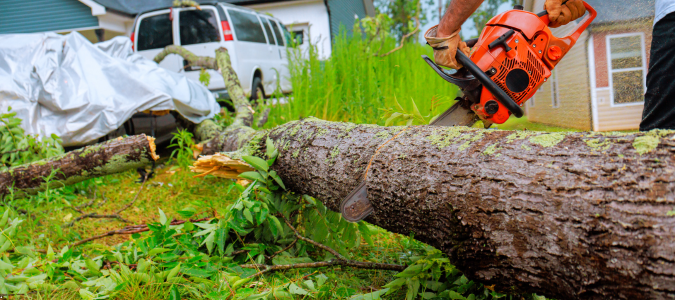
It’s advised not to attempt chainsaw work on trees damaged by a storm. Additionally, if you aren’t knowledgeable about tree health, it can be easy to cause further damage to the tree with your cuts.
If power lines are down, shut off your outdoor power. If a tree is touching a power line, call 911 right away.
Immediate Visual Checks
With these safety tips in mind, you can cautiously perform a visual check on the tree to assess the storm damage. Start by looking for cracks in the tree trunk. Next, inspect the branches for split or hanging limbs.
Storms can cause major damage to tree roots, so it’s important to check for uprooting or an unstable root plate. Lastly, look for fallen branches, especially if they are blocking driveways and roads.
Common Types of Storm Damage to Trees
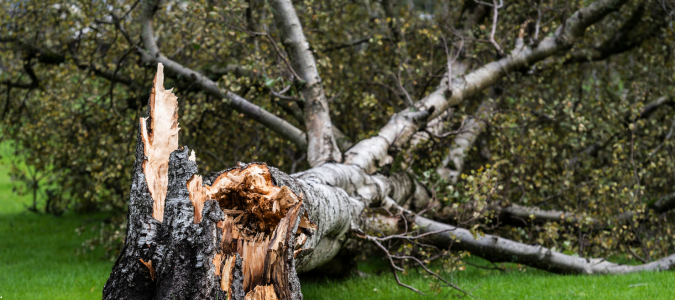
Different types of storms will damage your trees in unique ways. For example, a lightning storm will likely cause vertical bark loss. Lightning can also cause a “blowout.” This is when the trunk is damaged, but the tree is still standing.
A wind storm, on the other hand, is more likely to cause limb breakage, leaning trees and crown twisting.
Some of the most common types of damage include:
- Wind damage
- Lightning damage
- Hail damage
- Flood or saturated soil damage
Keep reading for a complete breakdown of the types of tree damage caused by storms.
Wind Damage
The most common type of tree damage caused by wind is limb breakage, which looks like broken, hanging or fallen limbs. These limbs are often still attached to the tree and awkwardly dangle until they are removed.
Limb breakage can cause splintering in the trunk and exposed wounds, which can make the tree more susceptible to pests and diseases. Large broken limbs can compromise the entire structure of the tree.
Mature trees, trees with existing decay and soft-wood trees are at a greater risk of limb damage than others. Contact an arborist to deal with broken limbs, especially if they are large or hanging near a structure. They can also answer common questions about mature trees, such as how long do oak trees live?
A wind storm can also cause leaning trees, which is when a tree has a noticeable tilt. A leaning tree indicates that the root system is unstable and can cause root failure. Trees with shallow roots and recently transplanted trees are at a greater risk of leaning due to excessive wind. Call in an arborist if you notice your trees leaning after a storm.
Finally, wind can cause crown twisting, which is when the upper canopy looks misaligned or rotated. You’ll notice that the silhouette of the tree appears off-kilter.
Crown twisting puts major stress on the trees’ branches and may cause sudden branch dieback or bark separation. Severe crown twisting can cause structural failure, so it’s important to contact an arborist to tend to your tree.
Lightning Damage
Lightning storms can cause vertical bark loss, which is when a vertical strip of bark is blown off the tree trunk and leaves behind bare wood. Vertical bark loss can reduce the flow and absorption of nutrients, so it’s important to contact an arborist to inspect the damage.
Next, lightning can cause a trunk blowout, which is when internal wood explodes outward and creates a crater-like hole or ruptured section of the trunk.
Blowouts cause severe internal and structural damage to trees, so it’s important to have them inspected and treated promptly. Older trees with pre-existing internal decay are especially susceptible to blowouts.
Hail Damage
Hailstorms can bruise tree bark, leaving behind small dents or patches of missing bark. The damage can reduce nutrient absorption and make the tree more open to pests and diseases. Young trees with thin bark are especially at risk of hail damage.
If your tree sustains deep wounds due to hail damage, contact an arborist to inspect them.
Next, hail damage can cause defoliation, which is when the leaves are shredded, torn or completely knocked off the branches. After a hailstorm, your tree may look sparser than it did before.
If defoliation impacts over fifty percent of your tree’s canopy and the leaves do not grow back after a few weeks, contact an arborist. They can trim your tree canopy the right way so that it grows back after defoliation.
Flood or Saturated Soil Damage
Excessive flooding can uproot trees altogether, exposing the root ball and toppling the tree. In some cases, the tree will lean heavily without fully falling. These trees are dangerous and require professional removal.
Flood and saturated soil damage can also cause soil instability, which is when the ground around the tree becomes soft or spongy. The tree will look “loose” in the soggy soil.
Unstable soil can cause trees to lean, crack and experience root plate movement. More than a few days of soil instability can cause lasting damage to the tree, so it’s important to contact a professional.
Can Your Storm-Damaged Tree Be Saved?
Storm-damaged trees may be able to be saved if they meet certain criteria.
Signs a Tree May Recover:
- Less than 25% of the canopy is lost
- Minor limb damage
- Strong, intact trunk
- Healthy root system
Signs the Tree is Beyond Saving:
- Major trunk split
- More than 50% canopy loss
- Uprooted or leaning more than 15 degrees
- Active decay or fungal growth after a storm
If you aren’t sure what the future looks like for your tree after sustaining storm damage, call in a certified arborist. Relying on a professional is the best way to preserve the life of your tree.
DIY Cleanup Versus Calling in a Professional
As a homeowner, you may be able to manage minor tree damage yourself. However, calling in a professional arborist is always the best bet.
When Homeowner Can Handle It
If the damage simply resulted in small branches on the ground, minor debris cleanup, or the need for light pruning, homeowners can handle it. When it comes to pruning, a general rule is to stick with limbs that are less than two inches in diameter. Remember that there’s a difference between tree pruning versus trimming. It’s best for homeowners to stick with light pruning while leaving trimming up to the professionals.
When to Call in an Arborist
If the storm resulted in large broken limbs or hanging branches, you should call in a professional. Additionally, if the tree is leaning toward your home, vehicle or another structure, expert intervention is needed. If the damage requires climbing the tree or using a chainsaw, leave this up to an arborist.
Why It Helps to Bring in a Professional
A certified arborist protects you against liabilities, such as a tree falling and causing significant damage to your home. They also know how to repair your tree while preventing additional stress. For example, their pruning methods will support the long-term health of your tree so that it can be restored to its original state before the storm.
Frequently Asked Questions
Can I trim or remove damaged branches myself?
When should I call an arborist after a storm?
Work With a Certified Arborist to Revive Your Storm-Damaged Trees
Storm damage to your trees is stressful, but it’s manageable when you take the right steps and call in the experts.
If your tree was damaged in a storm, don’t wait to address it. You may be able to take care of minor cleanup yourself, but if you’re unsure about the health of your tree or major cleanup, it’s best to contact a professional.