ABC Blog

Flying Carpenter Ants: Signs, Causes & How to Get Rid of Them
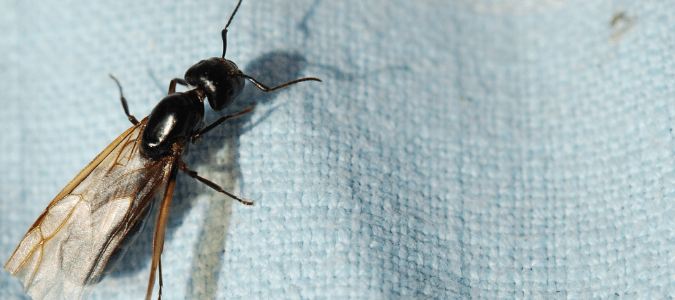
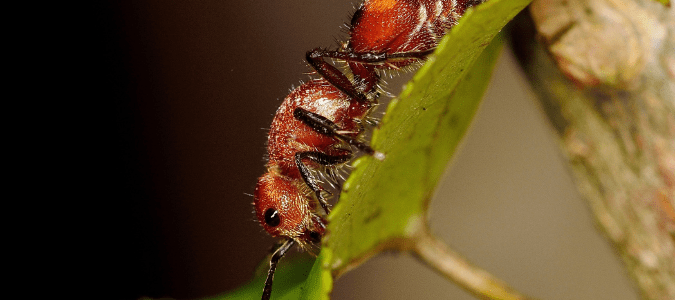
a winged carpenter ant

KEY TAKEAWAYS

  • Flying carpenter ants are swarmers, not strays. Spotting them means a mature colony is nearby — possibly already inside your home’s walls or woodwork.
  • They don’t eat wood, but they still destroy it. Carpenter ants hollow out galleries for nesting, weakening beams, sills, and frames from the inside.
  • Spring is peak season in Houston. Swarms typically emerge between February and June, often after warm, humid days.
  • Misidentifying them as termites is a costly mistake. The two pests look similar but require completely different treatments.
  • Moisture is the root cause. Most infestations trace back to a leak, drainage issue, or damp wood somewhere on the property.

What Are Flying Carpenter Ants?

Flying carpenter ants are the winged, reproductive … Read Full Post »
Types of Flying Cockroaches in Florida

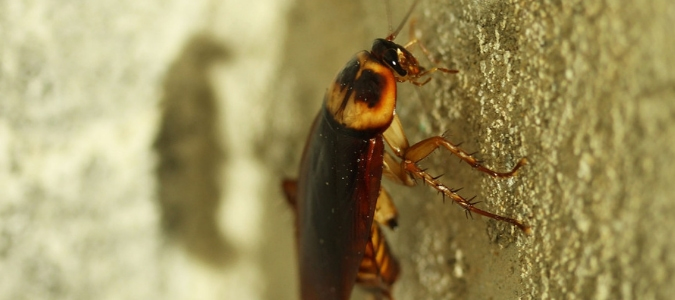
an American cockroach which is one variety of flying cockroach in Florida

Key Takeaways

  • Florida is home to several cockroach species capable of flight, including American, smoky brown, Cuban, and Asian cockroaches
  • American cockroaches (palmetto bugs) are the largest, growing up to two inches — they can fly but usually glide rather than take sustained flight
  • Smokybrown cockroaches are actually stronger fliers than American roaches and are strongly attracted to light, which is how many end up inside homes
  • Flying cockroaches don’t bite or sting, but they do spread bacteria and trigger allergies — so a sighting warrants action, not just a scream
  • Sealing entry points, fixing moisture issues, and replacing white outdoor lights with yellow bulbs can reduce infestations significantly
  • If flying roaches are showing up regularly, professional treatment is the fastest way … Read Full Post »

How To Identify Different Ant Species in Texas

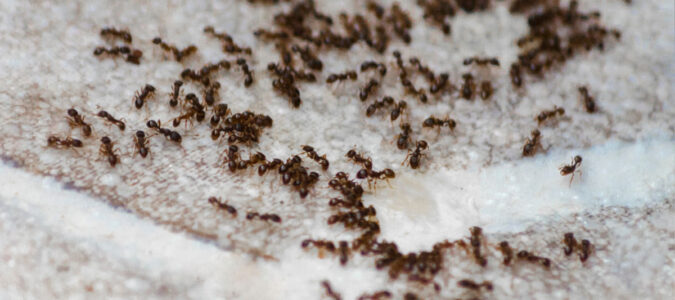
a crazy ant which is one ant species in texas

Key Takeaways

  • Texas has more than a dozen ant species, and Houston deals with most of them. Warm, humid conditions make Greater Houston one of the most active ant environments in the country.
  • Tawny crazy ants are an invasive Houston problem. This species invades electrical equipment and is nearly impossible to control without professional treatment.
  • Color alone won’t identify an ant. Behavior, nesting habits, and body shape tell more than appearance, especially when several species share similar coloring.
  • Pharaoh ants are the most common indoor species in Texas homes. Standard sprays split their colonies and make infestations worse — not better.
  • Carpenter ants and termites are often confused. Knowing the difference matters: they require completely different treatments.

Common Ant Species … Read Full Post »

What Causes Cockroaches in Your House?

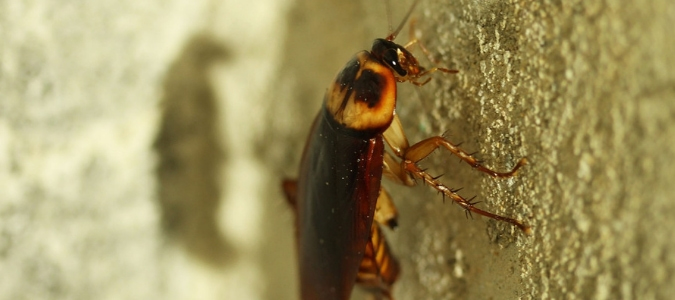
a cockroach climbing up a wall

Key Takeaways

  • Cockroaches don’t just invade dirty homes — any Houston house with accessible food, moisture, or entry points is at risk.
  • German cockroaches are the most common indoor species and spread fast; a single female can produce more than 200 eggs in her lifetime.
  • Larger species like American cockroaches typically live outdoors and enter homes through gaps, pipes, or worn weatherstripping.
  • Sealing entry points, eliminating standing water, and storing food in airtight containers are the most effective prevention steps.
  • If roaches are spotted regularly — or you notice musty odors, droppings, or egg cases — it’s time to call a professional.

What causes cockroaches? It’s a good question whether a Houston home already has a problem or just wants to … Read Full Post »

How to Get Rid of Ants in Houston: Complete Control Guide

KEY TAKEAWAYS

  • Houston’s subtropical climate means ants stay active almost year-round, with peak pressure in spring (March–May) and fall (September–October).
  • Species identification is the most critical step before treating — pharaoh ants split when sprayed, tawny crazy ants resist most consumer insecticides, and carpenter ants require a completely different approach than fire ants.
  • The Texas A&M Two-Step Method — broadcast bait first, mound drench second — is the most effective homeowner-level approach for fire ant control, best applied in spring or fall.
  • Tawny crazy ants are established across Harris County and are attracted to electronics and electrical systems, causing appliance and wiring damage that store-bought products cannot address.
  • For pharaoh ants, tawny crazy ants, carpenter ants with structural damage, or any infestation inside wall voids, professional treatment consistently outperforms DIY.

Houston homeowners deal with ants differently than people anywhere else in the country. It’s not just the sheer number of species here — it’s that several … Read Full Post »

Florida Carpenter Ants: Controlling An Infestation

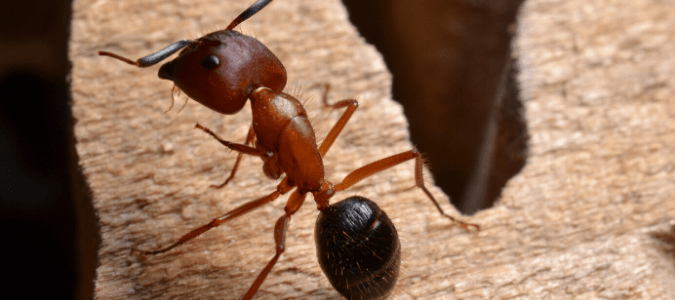
Florida carpenter ant on damaged wood

How to Get Rid of Florida Carpenter Ants

Orlando homeowners searching for pest control solutions often discover carpenter ants after noticing tiny piles of sawdust along baseboards or in attic crawl spaces. Learning how to get rid of carpenter ants starts with proper identification—confirming that the insects are actually Florida carpenter ants, not termites or another species.

Florida carpenter ants have a brown to rusty orange-colored head and thorax, with the bottom half of their bodies being black. This ant grows a circular ring of golden hairs around its abdomen. Antennae are bullet-shaped and segmented into 12 parts. Workers measure in at about a quarter of an inch to a half of an inch in length, while winged swarmers and the queen can reach up to three-quarters of an inch long.

If the ants on a … Read Full Post »

How To Tell if Termites Are Active

white termites in soil

Key Takeaways

  • Fresh mud tubes indicate activity — Moist, soft mud tubes that get repaired after breaking signal an active subterranean termite colony. Dry and crumbly? Old damage.
  • The mud tube test works — Break off a small section and check back in 2-3 days. If it’s rebuilt, they’re still using that pathway.
  • Clicking sounds reveal colonies — Soldier termites bang their heads against wood when disturbed. You might hear faint clicking inside walls at night.
  • Swarmers indoors = established colony — Finding winged termites inside your home means a mature colony’s already there. That’s a red flag.
  • Fresh frass confirms drywood activity — Tiny pellet-shaped droppings near wooden items? They’re actively feeding. Time to act.
  • Old damage looks different — Brittle … Read Full Post »

What Do Baby Termites Look Like?

what do baby termites look like

Any homeowner who has seen small, winged, ant-like insects in or around their home has probably wondered, What do baby termites look like? It’s wise to worry about a possible termite infestation, as these insects are a severe problem if they infest your home, garage, or other structure. They can cause thousands of dollars worth of damage to your property.

In fact, termites cause more than $5 billion in property damage across the United States every year. Clearly, a savvy homeowner should know how to identify termites. Telling these creatures apart from winged ants, for example, or any other look-alike insect species, however, can be challenging. Many of us know what these insects look like in their adult form, but what about termite larvae? Read on to learn about baby termites, the termite life cycle, the swarming season, and how to keep these dangerous pests away from your most significant … Read Full Post »

Signs of Termites in Houston Homes: The Complete Detection Guide

Key Takeaways

  • Mud tubes on foundation walls are the clearest sign of subterranean termite activity—check shaded areas and near plumbing penetrations.
  • Common signs of termites in your house include hollow-sounding wood, stuck doors/windows, and unexplained wall damage—all can indicate hidden infestations.
  • Houston’s climate supports year-round termite activity—Eastern subterranean, Formosan, and drywood termites all threaten local homes.
  • Swarmers (winged termites) emerging indoors signal that a mature colony already exists in or near your home.
  • Annual professional inspections remain the most effective prevention—catching infestations early saves thousands in repair costs.

Here’s a number that should make every Houston homeowner pay attention: termites cause more than $5 billion in property damage across the United States every year, according to the National Pest Management Association. And Texas? The state sits right in the thick of it. The warm, humid climate creates the perfect breeding ground for these wood-destroying insects, and Houston homes face threats from multiple termite species year-round.

The … Read Full Post »

Signs of Rodent Infestation After a Freeze

Signs of Rodent Infestation After a Houston Freeze — Here’s What Houston Homeowners Should Know

Hard freezes don’t hit Houston very often. But when they do, something predictable happens about a week later: homeowners start noticing signs of rodent infestation. Scratching in the attic. Scratching in the attic at odd hours. Droppings in the garage that weren’t there before. Chew marks are showing up in places you’d never expect.

The freeze itself isn’t when people notice. They’re too busy worrying about pipes and staying warm. It’s afterward—once life goes back to normal—that the evidence shows up. If you’re dealing with this right now, you’re not alone. And if you haven’t seen anything yet, this is actually the perfect window for rodent control before another cold snap rolls through.

What Makes Freezes So Bad for Rodent Problems

Rats and mice do just fine outdoors most of the year in Houston. They burrow under … Read Full Post »